
Proof of Car Insurance — North Dakota
Free to compare
When You Need Proof and What North Dakota Accepts
You're at the DMV counter registering a newly-purchased car, or a state trooper has pulled you over on I-94, or you're renewing your driver license online—and each situation demands proof of insurance in a slightly different form. North Dakota law requires you to carry proof whenever you operate a vehicle, but the state accepts three distinct formats, and not every format works in every context.
North Dakota recognizes paper insurance cards issued by your carrier, digital insurance ID cards displayed on your phone, and electronic verification through the state's real-time database system. Traffic stops accept all three. DMV transactions—vehicle registration, title transfer, license reinstatement—sometimes require paper or a specific electronic confirmation the counter agent can verify directly with your carrier.
“North Dakota accepts digital insurance cards at traffic stops, but DMV transactions often require paper proof or direct carrier verification.”
Find Coverage That Keeps You Legal in North Dakota
Get My North Dakota Car Insurance Quote$25,000 / $50,000 / $25,000
North Dakota Minimum Liability Limits
North Dakota requires at minimum $25,000 bodily injury per person, $50,000 bodily injury per accident, and $25,000 property damage. Your proof card must show limits meeting or exceeding these thresholds, plus confirmation of mandatory uninsured-motorist and personal-injury-protection coverage.
North Dakota Century Code 26.1-40-14
The Three Proof Formats and Where Each Works
Paper insurance cards remain the universal standard. Your carrier mails them when your policy begins or renews, and they display your policy number, coverage effective dates, vehicle identification number, and the liability limits your policy carries. Paper cards work everywhere: traffic stops, DMV counters, vehicle registration by mail, and license renewal at any Driver License Division office. Keep one in each insured vehicle's glove box and a second copy in your wallet if you drive multiple household cars.
Digital insurance ID cards—a photo of your paper card or a carrier-issued app screenshot—are accepted at traffic stops under North Dakota law, but DMV transactions are inconsistent. Some county treasurer offices and Driver License Division locations accept a phone-displayed card; others require paper or direct electronic verification from your carrier. Call ahead if you're registering a vehicle or reinstating a license and plan to use a digital card. The inconsistency stems from county-level policy, not state statute.
Electronic verification through the state's real-time insurance database works only when your carrier reports your policy to the North Dakota Department of Transportation automatically. Not all carriers participate in real-time reporting. If your carrier does, a DMV agent can confirm your coverage without seeing your card. If your carrier does not, you must provide paper or digital proof even if your policy is active. The database does not replace the legal requirement to carry proof in your vehicle—it supplements DMV transactions only.
North Dakota requires proof to show uninsured-motorist and personal-injury-protection coverage, not just liability. Many standard cards omit these mandatory coverages, which can delay registration even when your policy is compliant.

Consequences of Driving Without Proof
The citation does not distinguish between lacking insurance and lacking proof—if you cannot show a valid card at a traffic stop, you receive the citation even if your policy is active. You can contest the citation by presenting proof to the court that your insurance was in effect on the date of the stop, but doing so requires a court appearance and often a records request from your carrier.
A no-insurance citation triggers an administrative suspension of your driving privilege unless you provide proof of insurance to the North Dakota Department of Transportation Driver License Division within 15 days of the citation date. If the suspension exceeds 91 days, North Dakota requires SR-22 filing for one year after reinstatement. The SR-22 requirement applies even when the original violation was failure to show proof, not failure to carry coverage.
Vehicle registration lapses if you cannot provide proof at the time of renewal. North Dakota ties registration directly to insurance verification—no proof, no registration. If your carrier participates in the state's electronic verification system, the DMV can confirm coverage without your card. If not, you must provide paper or digital proof before the county treasurer will issue registration. Driving an unregistered vehicle is a separate citation carrying additional fines and potential impoundment.
10.6%
North Dakota Uninsured Motorist Rate
One in ten North Dakota drivers operates without insurance, which is why the state mandates uninsured-motorist coverage on every policy. Your proof card should confirm UM coverage to satisfy DMV agents during registration and reinstatement transactions.
Insurance Research Council, 2023

Proof Requirements for Multi-Vehicle Households
Households insuring two or more vehicles on one policy receive proof cards listing every VIN covered. Some carriers issue a single card with all vehicles; others issue separate cards per vehicle. Either format satisfies North Dakota law, but the single-card format creates a procedural problem: if one household member is stopped while driving a car not listed on the card they're carrying, the officer may issue a no-insurance citation even though the vehicle is insured under the same policy. Carry the card listing the VIN of the vehicle you're driving, or carry a card listing all household vehicles.
When household members drive different cars regularly, request separate cards per vehicle from your carrier. Most carriers provide them at no charge. Store each card in the glove box of the vehicle it covers. This eliminates the VIN-mismatch problem at traffic stops and ensures every driver in the household can produce proof without needing to locate the master card.
What to Do If You Cannot Produce Proof
If you're stopped and realize you left your proof card at home or in another vehicle, explain to the officer that your insurance is active and offer to provide proof within the timeframe the citation allows. North Dakota officers often issue a citation with a court date, giving you the opportunity to present proof to the court before the hearing. Bring your current proof card, your carrier's declarations page, and a letter from your carrier confirming coverage was in effect on the citation date. Most courts dismiss the citation when you demonstrate coverage, though some assess a reduced fine for failure to carry proof.
If your carrier has not yet mailed your updated proof card after a policy renewal, log into your carrier's online portal and download a digital card or print a temporary proof document. Most North Dakota carriers provide instant digital proof through their mobile apps. If your carrier does not, call their customer service line and request expedited mailing of your proof card, or ask them to email a PDF you can print. Do not drive without proof while waiting for the card to arrive—the citation and suspension risk outweigh the inconvenience of printing a temporary document.
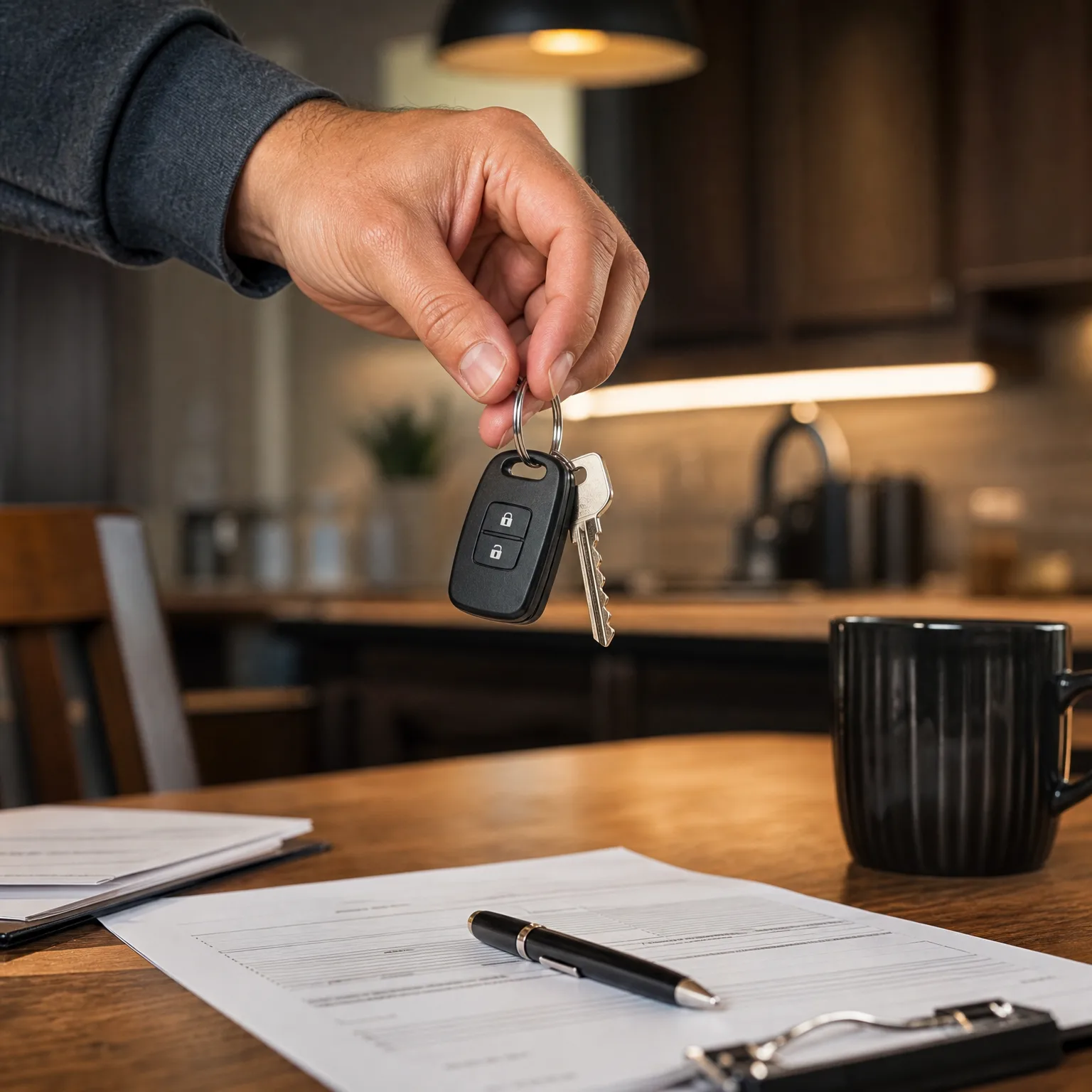
Compare Carriers and Confirm Your Proof Format
Nineteen carriers write auto insurance in North Dakota, and their proof-card formats and digital-ID-card systems vary. Some provide instant digital cards through mobile apps the moment your policy binds; others mail paper cards only and require 7-10 business days for delivery. If you need proof immediately after purchasing a policy—for same-day vehicle registration or a scheduled DMV appointment—confirm the carrier can provide digital proof before you buy. Carriers writing North Dakota policies include State Farm, Geico, Progressive, Allstate, and Farmers, all of which offer digital proof through their apps. Compare carriers that write coverage for households insuring multiple vehicles, confirm their proof-card delivery method, and verify they participate in North Dakota's electronic verification system if you prefer not to carry paper cards. Use the site's comparison tool to see which carriers write your household's vehicles and how quickly they provide proof after binding.
What Your Proof Card Must Display
The card must display your full legal name exactly as it appears on your driver license, the policy number your carrier assigned, and the vehicle identification number for each car covered under the policy. Multi-vehicle households receive one card listing every VIN, or separate cards per vehicle. The effective and expiration dates must bracket the current date—an expired card is treated as no proof, even if your policy renewed and the carrier has not yet mailed the updated card. Liability limits must appear in the $X/$Y/$Z format showing bodily-injury-per-person, bodily-injury-per-accident, and property-damage limits. If your card shows only 25/50/25 without the dollar signs, some DMV agents accept it; others do not.
North Dakota mandates uninsured-motorist coverage and personal-injury-protection coverage on every auto policy. Your proof card should confirm both. Many carriers print only liability limits on the card and bury UM and PIP confirmation in the declarations page. If a DMV agent questions whether your card shows mandatory coverages, provide the declarations page—it lists every coverage your policy carries. Failure to show UM or PIP can delay registration until you produce the full policy document, even though your coverage is compliant.
Get Your Free Quote
Get My North Dakota Car Insurance QuoteFrequently Asked Questions
Can I show a photo of my insurance card on my phone during a traffic stop in North Dakota?
Yes. North Dakota law accepts digital insurance ID cards displayed on your phone at traffic stops. The card must show your policy number, coverage dates, vehicle VIN, and liability limits. Some DMV transactions require paper proof or electronic verification, so call ahead if you're registering a vehicle or reinstating a license.
What happens if I get pulled over in North Dakota without my insurance card?
You can contest the citation by presenting proof to the court that coverage was in effect on the citation date.
Does North Dakota require uninsured motorist coverage to appear on my proof card?
North Dakota mandates uninsured-motorist and personal-injury-protection coverage on every auto policy, but not all carriers print these coverages on the proof card. If a DMV agent questions whether your card shows UM or PIP, provide your policy declarations page, which lists every coverage your policy carries.
How long does it take to get a new insurance card in North Dakota after buying a policy?
Paper cards typically arrive 7-10 business days after your policy binds. Most North Dakota carriers provide instant digital proof through their mobile apps or online portals the moment your policy is active. If you need proof immediately for vehicle registration or a DMV appointment, confirm the carrier offers digital cards before purchasing.
Do I need separate insurance cards for each vehicle in a multi-car household?
Not required, but recommended. North Dakota accepts a single card listing all household vehicle VINs, but carrying the card for the vehicle you're driving prevents VIN-mismatch citations at traffic stops. Request separate cards per vehicle from your carrier and store each in the corresponding glove box.
Can the North Dakota DMV verify my insurance electronically without seeing my card?
Sometimes. If your carrier participates in North Dakota's real-time insurance database, DMV agents can confirm your coverage without a card. Not all carriers participate. The electronic system does not replace the legal requirement to carry proof in your vehicle—it supplements DMV transactions only.