When North Dakota Requires SR-22 Filing
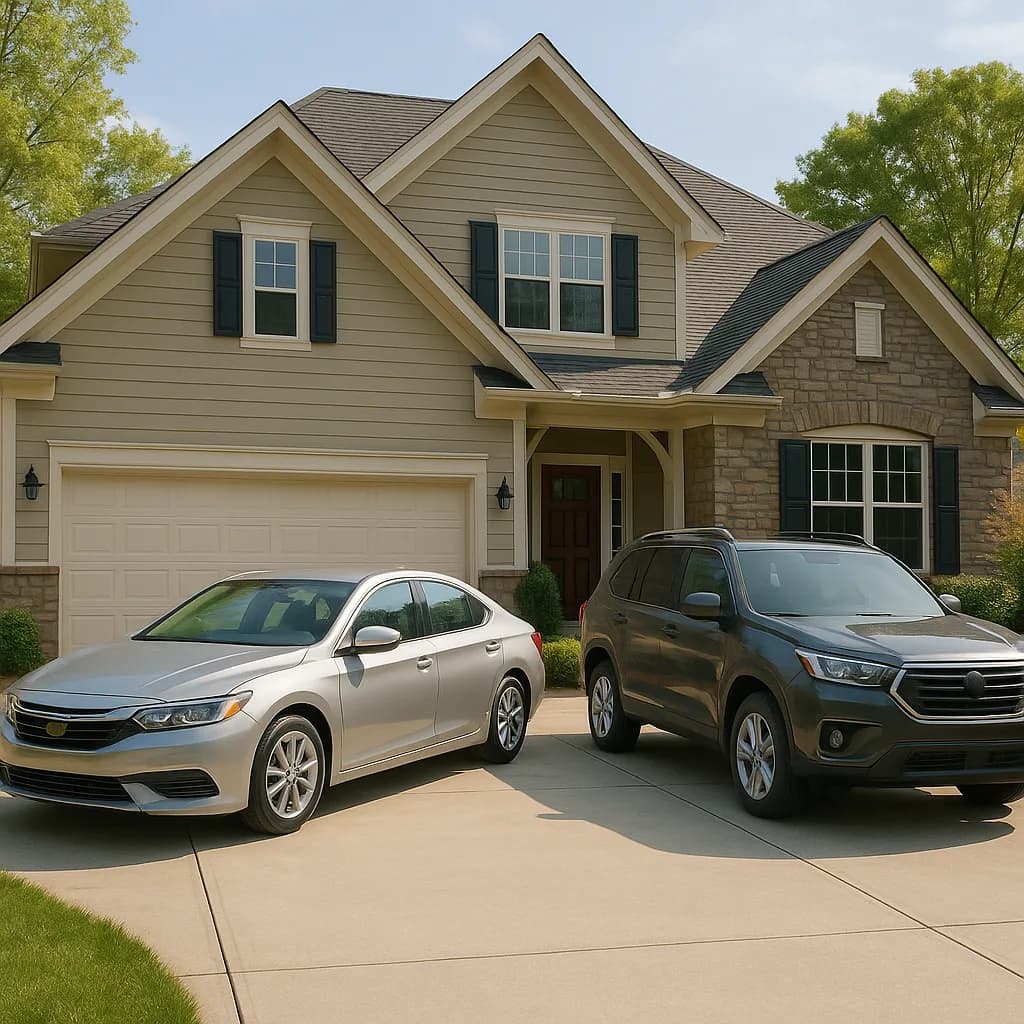
North Dakota requires SR-22 filing only after specific violations: DUI under NDCC 39-08-01, operating while your license is suspended for 91 or more days or revoked, any offense requiring revocation, an unsatisfied judgment, or a crash where no insurance was in effect. If you are insuring two or more vehicles on a standard household policy and have not been convicted of one of these violations, you do not need SR-22 filing—your proof of insurance is the standard ID card your carrier issues at policy inception.
Households often assume SR-22 is a type of insurance or a mandatory filing for all drivers. It is neither. SR-22 is a certificate your carrier files with the NDDOT Driver License Division confirming you carry at least North Dakota's minimum liability limits: $25,000 bodily injury per person, $50,000 per accident, and $25,000 property damage. The certificate exists to prove compliance after a violation that triggered a suspension or revocation. If your household has no such violation, the standard proof-of-insurance card satisfies registration and legal-driving requirements without any filing.
Compare car insurance rates in your state
Get quotes from licensed carriers — no obligation, no spam, results in minutes.
Get Your Free QuoteNorth Dakota SR-22 Filing Period
1 year
North Dakota requires SR-22 filing for one year after the triggering violation, measured from the conviction date under NDCC 39-16.1-09. The filing must remain continuous—any lapse restarts the one-year clock and extends your suspension.
NDCC 39-16.1-09
How SR-22 Filing Affects Multi-Vehicle Policies
SR-22 filing applies to the driver who committed the violation, not to every vehicle on the household policy. If one household member needs SR-22 and another does not, the filing attaches to the violating driver's record. The carrier files the certificate on behalf of that driver, and the household's other vehicles remain on the same policy without separate filings. The policy itself must meet North Dakota's minimum liability limits plus the state's mandatory PIP and uninsured-motorist coverage, but those requirements apply to every North Dakota auto policy regardless of SR-22 status.
Some carriers restrict SR-22 filings to specific underwriting tiers or decline to file SR-22 certificates at all. When one household member needs SR-22, the entire policy may move to a non-standard tier or require placement with a carrier that writes SR-22 business. This affects premium for every vehicle on the policy, even those driven by household members with clean records. Households insuring multiple vehicles should confirm which carriers in North Dakota write SR-22 and whether the carrier allows SR-22 and non-SR-22 drivers on the same policy before adding or removing a vehicle mid-term.
North Dakota offers two SR-22 form variants: owner and non-owner (operator). The owner form applies when the driver owns one or more vehicles; the non-owner form applies when the driver does not own a vehicle but needs to prove financial responsibility to reinstate a license. Households with multiple vehicles use the owner form. The non-owner form is relevant only to drivers who do not own a car but need SR-22 to satisfy reinstatement requirements—typically someone borrowing household vehicles or relying on public transit.
A lapse in SR-22 coverage restarts the one-year filing period and extends your suspension—continuous coverage is the only path to reinstatement.
Which Carriers Write SR-22 in North Dakota

Carriers confirmed to write SR-22 in North Dakota include Allstate, American Family, Bristol West, Farmers, Geico, Liberty Mutual, National General, Progressive, Root, State Farm, The General, and USAA. Each carrier applies its own underwriting rules to SR-22 filings—some place SR-22 drivers in a separate tier, some require the entire household policy to move to non-standard underwriting, and some decline SR-22 filings outright depending on the violation. Bristol West and The General specialize in non-standard auto insurance and accept SR-22 filings as a core product line. Standard-tier carriers like State Farm and Geico write SR-22 but may re-rate the policy or move it to a higher-risk tier.
When comparing carriers, confirm whether the carrier allows SR-22 and non-SR-22 drivers on the same policy and whether adding an SR-22 driver re-rates every vehicle. Some households split policies—one for the SR-22 driver, one for the rest—but this eliminates the multi-car discount and typically costs more than keeping everyone on one policy even after the SR-22 surcharge. Electronic filing is available in North Dakota, so most carriers process SR-22 certificates within one to three business days of policy binding.
Related Articles





Reinstatement Path After SR-22 Violation
North Dakota's administrative suspension runs until reinstatement requirements are met, not for a fixed term. The SR-22 filing must remain continuous for one year from the conviction date. If your policy lapses or cancels during that year, the carrier notifies NDDOT electronically, your suspension resumes, and the one-year clock restarts from the date you file a new SR-22.
Households with multiple vehicles face a coordination problem: the SR-22 driver cannot legally drive any household vehicle until reinstatement is complete, but the household's other drivers and vehicles remain insurable and drivable throughout the suspension. Some households exclude the suspended driver from the policy temporarily to avoid SR-22 surcharges, then add them back after reinstatement. This works only if the suspended driver does not live in the household or has no access to household vehicles—excluding a household member who still has access to a car violates most carrier underwriting rules and can void coverage at claim time.
North Dakota offers a Temporary Restricted License (TRL, form SFN 2254) for drivers whose licenses are suspended. The TRL allows purpose-restricted driving—employment, addiction treatment, school, or life-maintenance needs—during the suspension period. The TRL requires proof of financial responsibility, which means SR-22 filing, before the NDDOT Director will issue it. Households with one suspended driver and multiple vehicles can use the TRL to allow that driver limited access to a household vehicle while the SR-22 filing period runs, but the driver must carry the TRL and proof of SR-22 coverage at all times and drive only within the TRL's restrictions.
North Dakota License Reinstatement Fee
Additional fees apply for specific violations, and all fees must be paid before NDDOT will reinstate your license even after the SR-22 filing period ends.
NDDOT Driver License Division
Standard Proof of Insurance Without SR-22
If your household has no SR-22 requirement, your proof of insurance is the standard ID card your carrier issues when you bind the policy. North Dakota requires every registered vehicle to carry proof of insurance showing at least the state's minimum liability limits plus mandatory PIP and uninsured-motorist coverage. The ID card lists the policy number, coverage effective dates, the insured vehicles, and the carrier's contact information. You must carry this card in every insured vehicle and present it during traffic stops, at registration renewal, and after any crash.
Households insuring multiple vehicles receive one ID card per vehicle. Each card lists only the vehicle it covers, but all vehicles on the policy share the same policy number and coverage structure. If you add a vehicle mid-term, the carrier issues a new ID card for that vehicle within a few days. North Dakota does not require electronic proof-of-insurance, but most carriers offer a mobile app that displays a digital version of the ID card accepted by law enforcement and the DMV. Keep a physical card in each vehicle as backup—not every officer or registration clerk accepts digital proof without question.
Compare Carriers That Fit Your Household
If one household member needs SR-22, compare carriers that write SR-22 in North Dakota and confirm whether they allow SR-22 and non-SR-22 drivers on the same policy. If no one in your household needs SR-22, your proof-of-insurance requirement is the standard ID card, and you can compare any carrier writing auto policies in the state. The multi-car discount applies when every vehicle sits on the same policy, so splitting policies to isolate an SR-22 driver typically costs more than keeping everyone together even after the SR-22 surcharge. Use the comparison tool to see which carriers write your household's vehicles and how SR-22 filing affects premium across the policy.