
Proof of Insurance Rules — North Dakota
Free to compare
What Counts as Valid Proof in North Dakota
You bought a second car last week and drove to the DMV to register it, only to be told your phone screenshot of the insurance card does not count. The clerk wants a physical card or an electronic filing from your carrier. You thought proof was proof.
North Dakota law requires proof of financial responsibility for vehicle registration, license reinstatement after suspension, and traffic stops — but the acceptable formats vary by situation. A digital image satisfies a traffic stop under state statute, but registration and reinstatement require either a physical insurance card or direct electronic filing from the carrier to the state. Mixing formats causes procedural rejection.
“A screenshot satisfies a traffic stop but will be rejected at DMV registration — the state requires the physical card or carrier-transmitted proof.”
Find Coverage That Keeps You Legal in North Dakota
Get My North Dakota Car Insurance Quote$25,000 / $50,000 / $25,000
North Dakota Liability Minimums
North Dakota requires $25,000 bodily injury per person, $50,000 bodily injury per accident, and $25,000 property damage. The state also mandates personal injury protection and uninsured motorist coverage on every policy.
North Dakota Century Code 26.1-40-15
Three Formats the State Recognizes
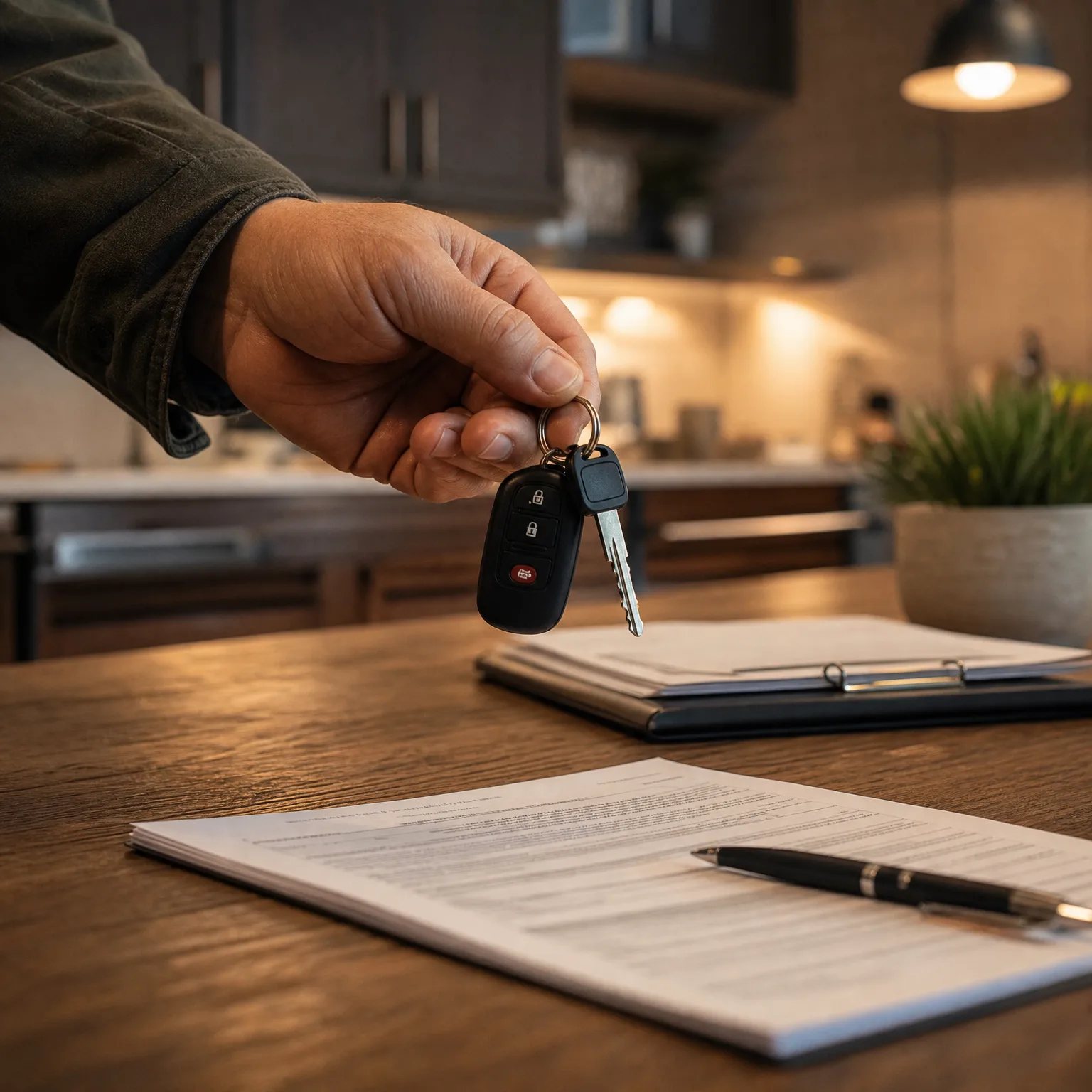
North Dakota accepts three proof formats: a physical insurance card issued by your carrier, a digital image of that card displayed on your phone, or an electronic SR-22 filing transmitted directly from the carrier to the NDDOT Driver License Division. The physical card and digital image are interchangeable at traffic stops. Registration and reinstatement require the physical card or the electronic filing — a photo of the card does not satisfy DMV requirements.
The electronic filing applies only when the state has ordered you to maintain proof on file, typically after a DUI conviction, operating while suspended for 91 days or longer, or an at-fault crash where no insurance was in effect. In those cases the carrier files an SR-22 certificate with the state for one year. For standard registration of a newly purchased vehicle, you present the physical card at the DMV counter or mail a copy with your registration application.
Most households insuring multiple vehicles receive one physical card per vehicle from the carrier within 7 to 10 business days of adding the car to the policy. If you need to register before the card arrives, call the carrier and request expedited delivery or ask whether they can transmit proof electronically to the DMV on your behalf. Not all carriers offer same-day electronic transmission for standard registration — this service is distinct from SR-22 filing and availability varies.
A screenshot of your insurance card satisfies a traffic stop but will be rejected at DMV registration — the state requires the physical card or carrier-transmitted electronic proof.


What Happens When Proof Lapses
If your insurance lapses and you continue driving, North Dakota law allows the DMV director to suspend your registration and your driver license. The state does not require carriers to notify the DMV immediately when a policy cancels, but many carriers do file electronic notices of cancellation. Once the DMV receives notice, you have 10 days to provide proof of new coverage or face suspension.
The SR-22 requirement applies when the suspension was for an at-fault crash with no insurance in effect, a DUI, or operating while suspended for 91 days or longer.
Households with multiple vehicles face compounded risk: if one vehicle's coverage lapses because you forgot to add it to the policy after purchase, the DMV can suspend registration for that vehicle and potentially suspend your license if the lapse period exceeds the grace window. Add every newly purchased vehicle to your policy within the carrier's grace period — typically 14 to 30 days depending on the carrier — and request the insurance card immediately to avoid registration delays.
10.6%
North Dakota Uninsured Motorist Rate
One in ten drivers on North Dakota roads carries no insurance. The state mandates uninsured motorist coverage on every policy to protect you when an at-fault driver cannot pay for damages.
Insurance Research Council, 2023
Proof Requirements for License Renewal
North Dakota does not require proof of insurance at standard driver license renewal unless your license was previously suspended for an insurance-related violation. If you are renewing a standard license with no suspension history, the DMV will not ask for proof. If your license was suspended and reinstated with an SR-22 requirement, you must maintain the SR-22 filing for the full one-year period, and the DMV will verify the filing is active before allowing renewal.
Senior drivers renewing at age 70 or older must appear in person and pass a vision test, but proof of insurance is still not required unless a prior suspension triggered the SR-22 mandate. The in-person requirement exists to verify vision and identity, not insurance status.
Carrier Roster and Electronic Filing Availability
Nineteen carriers write auto insurance in North Dakota, including liability coverage and full coverage policies. Not all carriers offer same-day electronic proof transmission for standard registration — this capability is separate from SR-22 filing and depends on the carrier's integration with the NDDOT system. When you add a vehicle to your policy, ask the carrier whether they can transmit proof directly to the DMV if you need to register before the physical card arrives. If not, plan to wait for the card or request expedited shipping.
For households insuring multiple vehicles, confirm that every vehicle added to the policy generates its own insurance card. Some carriers issue a single card listing all vehicles; others issue one card per vehicle. The DMV requires proof specific to the VIN being registered, so a multi-vehicle card works only if all VINs appear on it. If your carrier issues one card per vehicle, store each card with the corresponding vehicle's registration and title documents to avoid confusion at renewal or during a traffic stop.

Next Step
If you are registering a newly purchased vehicle, contact your carrier today and request the insurance card for that VIN. If the card will not arrive before your DMV appointment, ask whether the carrier can transmit proof electronically to the registration office. If you are adding a second or third vehicle to an existing policy, verify that the carrier will issue separate cards for each vehicle, and confirm the policy meets North Dakota's mandatory personal injury protection and uninsured motorist coverage requirements before you drive the new car off the lot.
Registration Proof Requirements by Vehicle Count
North Dakota issues one registration per vehicle, and each registration file must contain proof that the specific vehicle is insured. Your carrier issues a separate insurance card for each vehicle listed on the policy. When you register three cars, bring three cards — one per VIN. The DMV clerk will not accept a single card listing multiple vehicles unless each vehicle's VIN appears on that card, which is rare. Most carriers print one card per vehicle.
If you are registering a newly added vehicle mid-term and the carrier has not yet mailed the card, you have two options: wait for the card to arrive and register within the state's 10-day grace period from the date of purchase, or contact the carrier and request they fax or email proof directly to the DMV office where you are registering. The second option works only if the DMV office accepts electronic transmission for standard registration, which varies by county. Call ahead to confirm.
Get Your Free Quote
Get My North Dakota Car Insurance QuoteFrequently Asked Questions
Can I show my insurance card on my phone during a traffic stop in North Dakota?
Yes. North Dakota law allows digital proof of insurance at traffic stops. Display the insurance card image on your phone to the officer. The digital image and the physical card are legally equivalent during roadside verification.
Does North Dakota require proof of insurance to register a vehicle?
Yes. You must present a physical insurance card or have your carrier transmit electronic proof directly to the DMV when registering a vehicle. A photo of the card on your phone does not satisfy registration requirements.
What happens if my insurance lapses while I am driving in North Dakota?
The DMV can suspend your registration and driver license. Many carriers file electronic cancellation notices with the state.
Do I need separate insurance cards for each vehicle I own in North Dakota?
Yes, for registration purposes. Each vehicle needs its own proof document at the DMV, even if all vehicles are on one policy. Most carriers issue one card per vehicle. Bring one card per vehicle when registering multiple cars.
Does North Dakota require an SR-22 filing for all drivers?
No. SR-22 filing is required only after specific violations: DUI, operating while suspended for 91 days or longer, at-fault crash with no insurance, or unsatisfied judgment. Standard registration and license renewal do not require SR-22 unless one of these violations occurred.
Can I register a car in North Dakota before the insurance card arrives?
Sometimes. If your carrier can transmit proof electronically to the DMV, you can register immediately. If not, you must wait for the physical card to arrive. North Dakota allows a 10-day grace period from the date of purchase to complete registration.