When Adding a Second Vehicle Doesn't Lower Your Premium
You added a second car to your North Dakota policy expecting the multi-car discount to drop your total premium, but the combined rate came back higher than two separate policies. The carrier counted both vehicles but applied the discount only to one, or required proof that both cars garage at the same address before the discount triggered. You're now comparing carriers to find out which one structures the multi-car discount in a way that actually saves money for your household.
North Dakota law requires every vehicle you own to carry at least $25,000 bodily injury per person, $50,000 bodily injury per accident, and $25,000 property damage, plus personal injury protection and uninsured motorist coverage. Those minimums apply to each car individually. The multi-car discount reduces the per-vehicle premium when you insure multiple cars on one policy, but the discount's structure—how many vehicles must share a garaging address, whether titled vehicles count differently than registered ones, and whether the discount applies to all coverages or only liability—varies by carrier. This article walks the specific carrier attributes that determine whether combining your vehicles on one North Dakota policy lowers your total cost or raises it.
Compare car insurance rates in your state
Get quotes from licensed carriers — no obligation, no spam, results in minutes.
Get Your Free QuoteNorth Dakota Multi-Car Writers
17 carriers
Allstate, American Family, Amica, Auto-Owners, Bristol West, Country Financial, Farmers, Geico, Hartford, Liberty Mutual, National General, Nationwide, Progressive, Root, State Farm, The General, Travelers, and USAA all write multi-vehicle policies in North Dakota. Discount structure and same-policy requirements differ across this roster.
North Dakota Insurance Department carrier roster, 2025
What the Multi-Car Discount Actually Covers
The multi-car discount is a per-vehicle rate reduction applied when you insure two or more cars on the same policy. Most carriers apply the discount to liability, collision, and comprehensive premiums; a few apply it only to liability. The discount does not change your state-mandated minimum coverage amounts—you still carry $25,000/$50,000/$25,000 liability, plus PIP and uninsured motorist, on every vehicle. The discount lowers the premium you pay for that coverage.
The discount triggers only when every vehicle sits on one policy. If you and a household member each maintain separate policies, neither policy qualifies for the multi-car discount even if both cars garage at the same address. Combining the two policies into one—listing both drivers and both vehicles on a single policy—is the structural requirement that activates the discount. Some carriers require that both vehicles share a garaging address; others count any vehicle titled to a policyholder or listed household member regardless of where it parks overnight.
A smaller discount on a lower base rate often beats a larger discount on a higher one. Carrier A might advertise a multi-car discount but start with a higher per-vehicle base rate; Carrier B's lower base rate with a modest discount produces a lower combined premium. The only way to know which carrier's structure favors your household is to compare quotes with every vehicle, every driver, and your actual garaging addresses entered identically across carriers.
The multi-car discount applies only when every vehicle and every driver sit on one policy. Separate policies—even at the same address—do not qualify.
How Garaging Address and Titling Affect the Discount
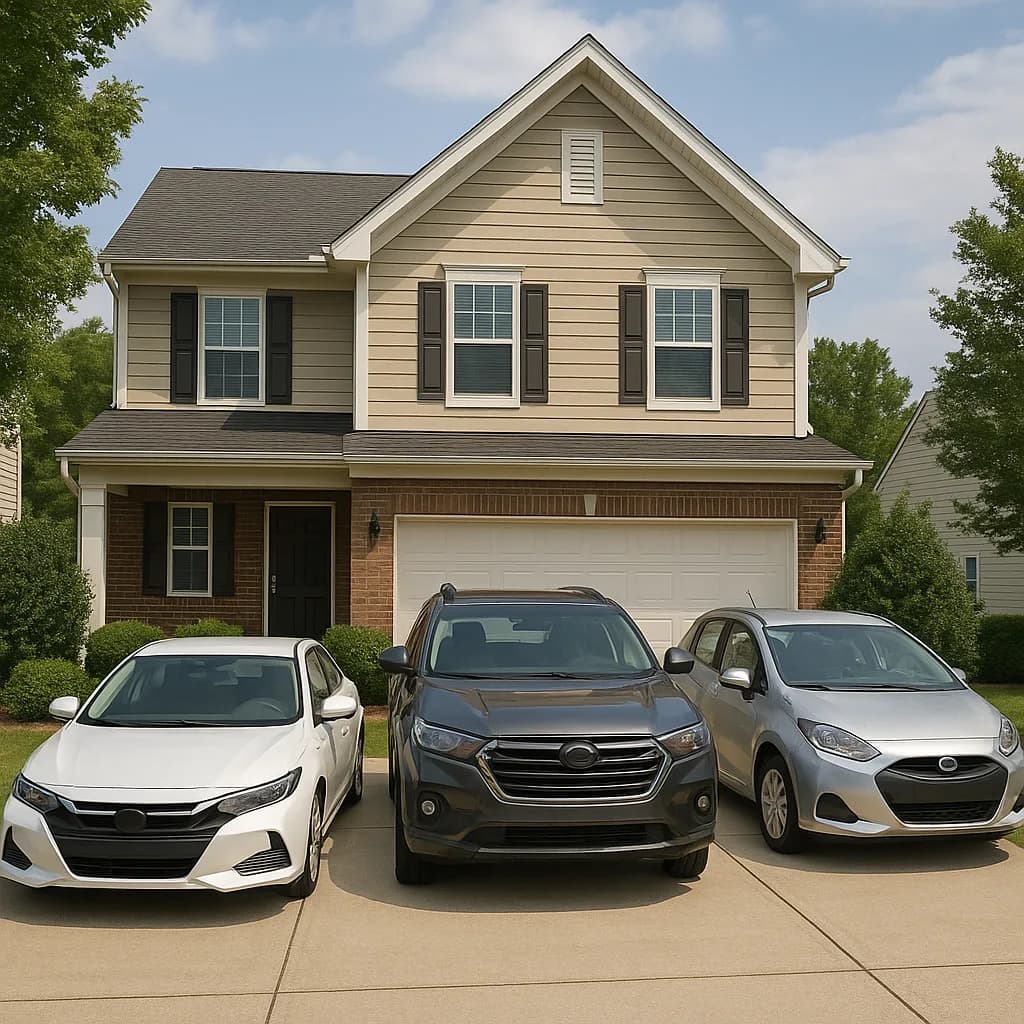
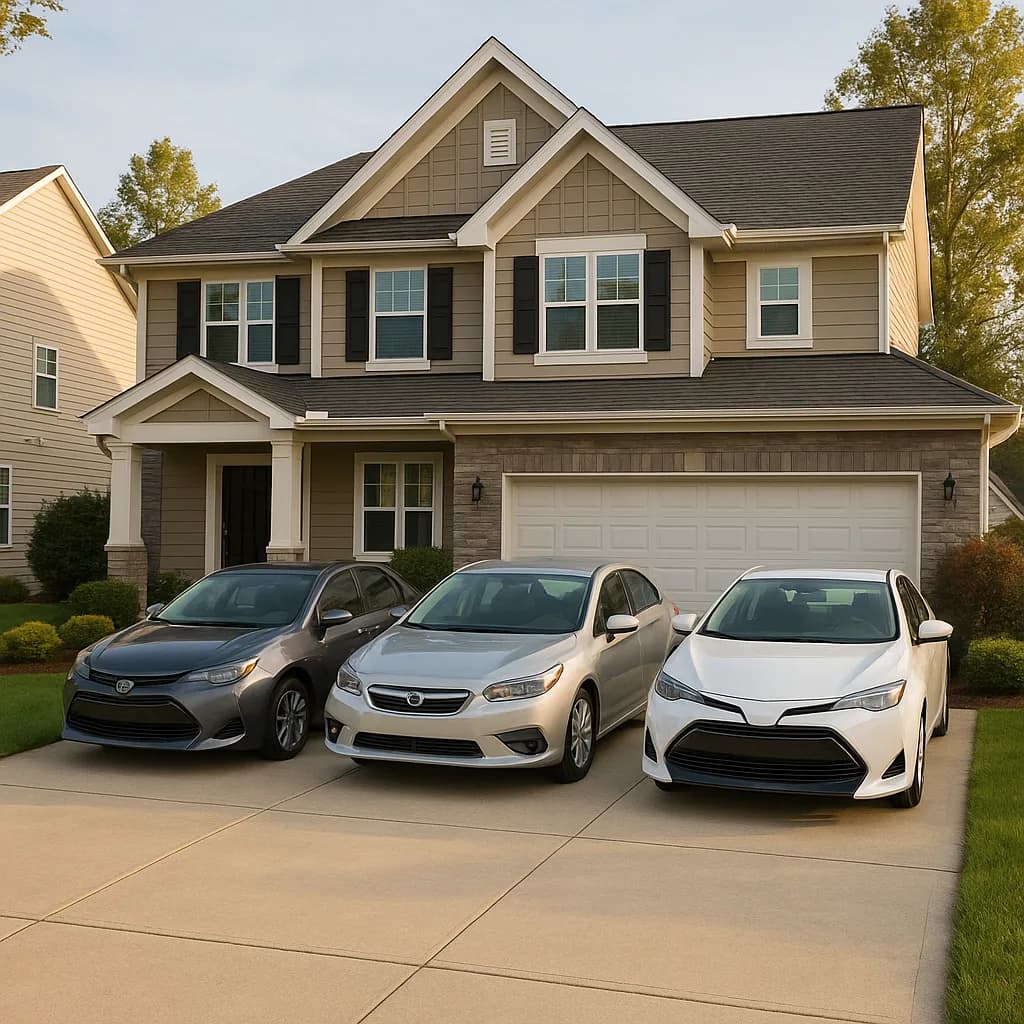
Most North Dakota carriers require that every vehicle on the policy garage at the same address to qualify for the multi-car discount. If you own two cars but one garages at a second property—a cabin, a college campus lot, or a work parking structure—the carrier may deny the discount or require you to list the second address as an additional garaging location, which re-rates both vehicles based on the higher-risk location's zip code. A few carriers allow the discount when vehicles garage at different addresses within the same household, but those carriers are the exception.
Titling matters when a household member owns a vehicle outright but is not the named policyholder. If your spouse, adult child, or roommate holds title to one car and you hold title to the other, some carriers count both vehicles toward the multi-car discount as long as both owners are listed drivers on the policy. Other carriers require that the policyholder hold title to every vehicle, or that every vehicle be registered to the same person. If your household's vehicles are titled to different people, ask each carrier explicitly whether both vehicles qualify for the discount before you combine policies.
Related Articles


Comparing Carriers That Write Multi-Car Policies in North Dakota
Seventeen carriers write multi-vehicle policies in North Dakota. State Farm, Geico, Progressive, Allstate, and Farmers write the largest volume of multi-car policies statewide and offer online quoting tools that let you enter multiple vehicles and drivers in one session. American Family, Auto-Owners, Country Financial, and Nationwide write multi-car policies through independent agents; you'll need to contact an agent to get a quote that reflects your household's actual vehicle count and garaging addresses.
Bristol West, The General, and National General write non-standard multi-car policies for households with recent violations, lapses, or non-owner histories. Root and Liberty Mutual offer app-based quoting that incorporates telematics data; if your household includes a low-mileage vehicle or a driver with a clean record, those carriers may structure the multi-car discount more favorably than carriers that rate purely on vehicle count and garaging zip code. USAA writes only for military-affiliated households but offers competitive multi-car rates when you qualify.
Amica, Hartford, and Travelers write preferred-tier multi-car policies with stricter underwriting but lower base rates. If every driver in your household has a clean record and you're adding a second or third vehicle, those carriers often produce the lowest combined premium even if their advertised multi-car discount percentage is smaller than a standard-tier carrier's. The structural advantage is the lower starting rate, not the discount size.
North Dakota Liability Minimums
Every vehicle on your policy must carry at least $25,000 bodily injury per person, $50,000 bodily injury per accident, and $25,000 property damage. PIP and uninsured motorist coverage are also mandatory. The multi-car discount applies to the premium for these coverages, not the coverage amounts themselves.
North Dakota Century Code 26.1-41-09
When Combining Policies Raises Your Total Premium
Combining two separate policies into one multi-car policy does not always lower your total cost. If one driver has a clean record and the other has a recent violation, the combined policy rates both drivers together, and the higher-risk driver's surcharge often outweighs the multi-car discount. Some carriers let you maintain separate policies for each driver and still apply a household discount; others require that every driver and every vehicle sit on one policy to qualify for any discount at all.
A newly-added vehicle re-rates the entire policy, not just the new car. If you're adding a third vehicle mid-term, the carrier recalculates the premium for all three cars based on the new vehicle's make, model, garaging address, and the driver you assign to it. If the new car is higher-risk—a sports car, a vehicle with a theft-prone model history, or a car garaged in a higher-rate zip code—the combined premium can jump even with the multi-car discount applied. Compare the combined three-car quote against your current two-car premium plus a separate policy for the third vehicle before you commit to combining.
What to Do Right Now
Start by listing every vehicle you need to insure, the garaging address for each car, and every driver who will operate any of those vehicles. Enter that information identically into quote tools for at least three carriers from the roster above—one preferred-tier carrier, one standard-tier carrier, and one non-standard carrier if any driver has a recent violation. Request quotes with every vehicle on one policy and, if your household includes drivers with different risk profiles, request separate quotes with vehicles split across two policies to compare the total cost.
When you receive quotes, confirm that the multi-car discount is applied to every vehicle, not just the first or second car. Ask each carrier whether the discount requires that all vehicles garage at the same address, and whether vehicles titled to different household members qualify. If a carrier's quote does not reflect the discount, ask why—some carriers apply it only after you bind the policy, others require proof of garaging or titling before the discount triggers. Once you've confirmed the discount structure, compare the total annual premium across carriers and choose the one that produces the lowest combined cost for your household's actual vehicle count, driver mix, and garaging addresses.